My Cart

While we believe that actions usually speak louder than words, we also value the power of story telling and the clarity and intimacy that good environmental writing can bring to our community. Our environmental feature stories are such testaments, reflections, rants and raves. Colleagues, activists and friends are here, lending their voices to our stubborn and ongoing work for wilderness preservation.

Dyeing Rivers

China’s Pearl River runs black from indigo dye discharged by denim factories in Xintang, Guangzhou – the “Blue Jeans Capital of the World.” A satellite photo from a well-known environmental group shows it quite clearly. The wastewater from dyeing 200 million pairs of blue jeans a year flows mostly untreated from the denim factories into the river.

Dyeing Rivers

Downstream From Your Jeans

Across the world, nitrogen runoff from synthetic pesticides and fertilizers is creating aquatic dead zones in freshwater lakes and in oceans, killing off species of fish and crustaceans. Called eutrophication, these dead zones are growing exponentially.

Downstream From Your Jeans

The Sacred Headwaters

This is not a story of Tibet or the Amazon, of life on the Arctic ice or in the searing sands of the Sahara. It is a story of my own backyard, a land known to the Tahltan people and all the First Nations of British Columbia as the Sacred Headwaters, the birthplace of the three great free-flowing salmon rivers of home: the Stikine, Skeena and Nass.

The Sacred Headwaters

Restoring Hetch Hetchy

In 1871, on his first walk into Hetch Hetchy Valley, John Muir was struck, as all visitors after him would be, by its uncanny resemblance to Yosemite. Both valleys, Muir noted, run generally east to west, with a northward bend in the middle. At Hetch Hetchy’s western end stand massive spires resembling the Cathedral Rocks of Yosemite.

Restoring Hetch Hetchy

Take Back the Holidays

It’s that special time of year: chestnuts roasting on an open fire, festive lights, family and friends ... plus shop-’til-you drop stress, billions in credit-card debt and 4 million tons of wrapping paper and shopping bags sent to the dump.

Take Back the Holidays

One Planet, One Vote

In 1991, Patagonia was growing at a rate of 50 percent a year, and we hit the wall in the midst of the savings and loan crisis. The bank reduced our credit line twice in several months, and we ended up borrowing from friends to meet payroll. We laid off 20 percent of our workforce on July 31, 1991.

One Planet, One Vote

Warmer

“It’s hot!” As I slog my way up another step, sunscreen drips down my forehead and stings my eyes. I’m battling my skins, which keep sliding backwards as I focus on staying upright. The snow beneath my skis is slicker by the minute. The sun and the snow fuse in radiating heat waves.

Warmer

The Dawn of Dam Removal

When I began considering dam removal, the Elwha River quickly emerged at the top of my list. The river flows through the heart of Olympic National Park. It once hosted the most prolific salmon runs in the Northwest. And the tiny amount of electricity from the dams could easily be replaced from other sources.

The Dawn of Dam Removal

Running Free

Within minutes of the Edwards Dam removal in 1999, Nate Gray, a Maine Department of Marine Resources scientist, could see fish trying to get through the breach. They were shad, now able to travel up the Kennebec River for the first time in 162 years.

Running Free

Explosive

Thomas O’Keefe, American Whitewater’s Pacific Northwest stewardship director, stood on the banks of the White Salmon River in Washington State. The scheduled explosion was running late. As Tom looked downstream, he could see what was left of the river after 100 years – shallow pools of water starved of sediment for the past century.

Explosive

Longhouse Wisdom

Rebecca Miles and her family grew up harvesting their own food in North Central Idaho. They weren’t back-to-the-landers or urban DIYers. They were members of the Nez Perce tribe, where self-reliance and stewardship have been passed down for generations.

Longhouse Wisdom

River of Sand

Matilija Coalition founder Paul Jenkin’s quest to tear down a dam began not on a river, but on the beach at Surfer’s Point in Ventura, California, where ocean waves threatened to devour a new bike path, and talk of building a half-mile seawall to protect it was growing louder.

River of Sand

Have A Snack, Save A Species

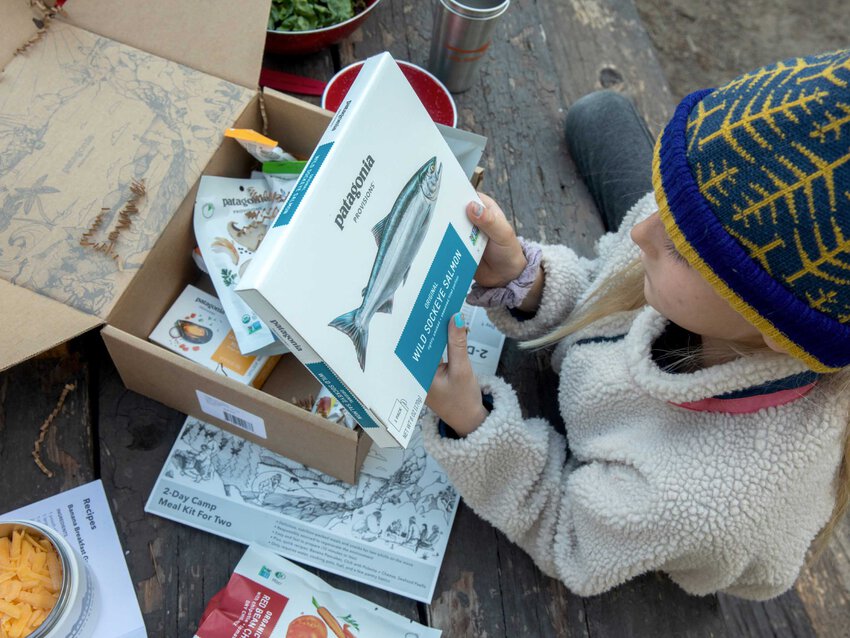
The Patagonia Provisions Salmon Project is our effort to change the fishing industry, the same way we’ve changed how we make our clothes. Our goal is to create a new model that demonstrates how selectively harvesting salmon is not only possible, but good business, and can help protect the future of wild salmon.

Have A Snack, Save A Species

Rios Libres

Another of the world’s rivers is being laid on the slab, an enormous turquoise wanderer flowing out of the Southern Andes. The largest river in Chile, the Rio Baker is undammed from source to sea. For the moment.

Rios Libres

Enviro Essay Archive

While we believe that actions usually speak louder than words, we also value the power of story telling and the clarity and intimacy that good environmental writing can bring to our community. Our environmental feature stories are such testaments, reflections, rants and raves. Colleagues, activists and friends are here, lending their voices to our stubborn and ongoing work for wilderness preservation.